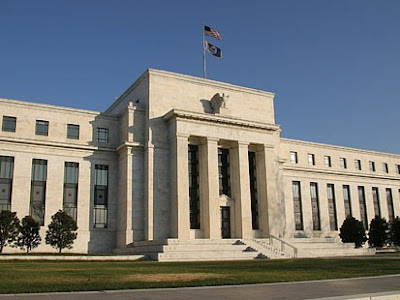
QE2 is out of the bag, and the result is $600 billion in treasury purchases, or $75b a month until such action is deemed unnecessary or inadequate. The $600b figure is interesting, and I don’t think it is a coincidence the Fed landed on a number just above the “rock-bottom” floor of $500b. While there were some faint whispers this morning of a peanuts (~$300b) QE 2, the number, in my mind, was always going to fall somewhere between $500b and $1 trillion. With that expectation in mind, the Fed exercised restraint while satisfying the markets’ voracious appetite. Besides, much of the work had already been done.
As most had begun to suspect in recent weeks, the number came in light compared to some of the previously publicized expectations denominated in the trillions. The market had rallied relentlessly since the late August Fed retreat in Jackson Hole when Ben Bernanke made it clear the committee stands ready to take bold and decisive action to meet its dual mandate. The Fed has been particularly emphatic from the start on its goal to avoid a deflationary spiral at all costs and maintain an inflationary environment. Mr. Bernanke kept his implicit promise to Milton Friedman, operating under the belief that a contraction in the money supply exacerbated the Great Depression.
All things considered, I feel like today’s announcement, and the handling of the matter leading up to it, was a masterstroke from the Fed and Ben Bernanke. You heard me right, I think they got it right. Over the course of the year, our much-maligned Federal Reserve Bank has been faced with a seemingly impossible task to stimulate growth and meet its dual mandate of inflation and low unemployment. They didn’t have any help, either. Stimulus initiatives and further deficit spending had become highly politicized topics, something President Obama would not shove down our throats at a time of sagging approval ratings and crucial mid-term elections. To the detriment of the recovery, such measures were completely off the table. The Obama administration has over promised and under-delivered on its message of change because its leading policy-makers have shown such a lack of strength in their convictions, but that is a story for another day. As it was, the Fed was on its own in this high-stakes quest, likely feeling much like the hobbit Frodo Baggins on his perilous journey to destroy the ring. In both cases, a heroic figure showed uncommon courage and unwavering belief in his ideals.
The Fed is the lender of last resorts in our financial system, and it fulfilled its duty with the first round of quantitative easing, preventing economic calamity. However, even after a complete collapse was averted, aggregate demand lagged, capital markets froze and data showed anemic growth in the economy. With interest rates at zero-bound, the Fed was ostensibly out of bullets. But a real assassin has a knife in his sock. You know, just in case.
The Fed used its sharp tongue to build expectations of further monetary easing, using dovish language to build confidence. In doing so, it fought half the battle without having to even reach for the checkbook. As I wrote on this blog last week, the Fed was stringing us along with QE 2, but that was their intention! Through carefully crafted language in its minutes, the FOMC made it abundantly clear that slow growth and inflation were not acceptable, and had no qualms about further increasing the money supply. Noted economists, and even some Fed governors, noted that we were in a liquidity trap. They did not, in some perverse way, WANT to engage in a great economic experiment of all time with another round of large scale asset purchases, but knew they must stand willing in order to accomplish their goal. The market priced in one of two scenarios, as David Tepper told it: 1) the economy would improve on its own or 2) the Fed would intervene to prop up asset prices. By simply standing confidently at the bottom of the water slide, Daddy Bernanke gave his anxious ‘children’ the reassurance they needed to take the plunge back into equities.
As today’s announcement approached, a funny thing happened: it all started to seem very anti-climactic. I had pictured this day in my head; it would be a whirlwind on the trading floor, the market would flail violently as market players coped with historic intervention by the Fed, or sell-off hard when the announcement came in light of ‘priced-in’ expectations. But when I awoke this morning, all the drama and anticipation was already sucked out of it. Market commentators continued to talk about this day as a potential turning point simply because they had become programmed like robots to do so (also a rant for another day). The Fed had already accomplished much of its goal prior to judgement day, and in the end was able to unveil a much more modest version of QE 2 than was initially mooted.
Don’t expect Mr. Bernanke to hand over his knife now; language will remain his sharpest weapon. Just look at this side by side comparison of FOMC statements from today, November 3 and the previous meeting on September 21. Nothing has changed in terms of the tone. Our Federal Reserve bank has taken much criticism for its unprecedented action, but don’t look now, they may have just done the trick.