EUR/USD
After initially finding support around 1.2650, the Euro was unable to regain the 1.27 level and was subjected to sustained selling pressure during the day.
The latest German PMI manufacturing sector data recorded a decline to 44.7 from 45.2 previously which was a fresh three-year low for the series while the Euro-zone figure as a whole edged lower to 44.8, maintaining fears surrounding the economic outlook. The weak data will maintain pressure for an even more aggressive ECB monetary policy and the bank also relaxed collateral rules to help peripheral banks while political pressures will intensify. A meeting in Italy between the four largest Euro-zone countries on Friday will be watched very closely.
The new Greek government stated that it was aiming to revise the terms of the Greek loan package, but comments from German officials continued to suggest that concessions would be limited with the troika due to visit Greece as soon as possible amid reports that fiscal targets had not been met. There were further concerns surrounding the Italian and Spanish outlook, especially after former Italian Prime Minster Berlusconi floated the proposition that Italy should withdraw from the Euro. There was, however, a sharp decline in Spanish benchmark yields which provided some relief.
The initial Spanish banking-sector stresses tests indicated that an additional EUR51-62bn in capital would be required under adverse conditions. The Eurogroup informally agreed that EFSF funds should be used to fund a Spanish bank bailout with a formal request expected by the beginning of next week.
The US data was generally weaker than expected as initial jobless claims only declined to 387,000 from a revised 389,000 previously while existing home sales fell 1.5%. The latest PMI manufacturing index recorded a decline to 52.9 from 54.0 and there was a second successive sharp monthly decline for the Philadelphia Fed index as it fell to -16.6 from -5.8. The data will maintain fears over a significant deterioration in the US outlook and will maintain speculation that the Fed will eventually move to an even more aggressive stance in boosting monetary policy further.
There was a general tone of risk aversion during the US session as fears dominated which also underpinned the dollar and the Euro dropped through a series of support levels with a low below 1.2550.
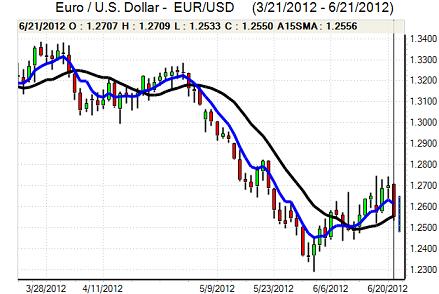
Source: VantagePoint Intermarket Analysis Software
Call now and you will be provided with FREE recent forecasts
that are up to 86% accurate* 800-732-5407
If you would rather have the recent forecasts sent to you, please go here
Yen
The dollar maintained a strong tone against the yen in European trading and pushed above the 80 level for the first time in a month with a peak in the 80.30 area.
The yen initially failed to gain support from increased caution surrounding risk appetite and there were only temporary net yen gains late in the New York session as the yen tended to under-perform on the crosses.
This pattern persisted in Asian trading on Friday with the dollar nudging highs above 80.40 with some further comments that the Bank of Japan was prepared to act aggressively to support the economy which increased speculation over further action next month.
Sterling
The latest retail sales data was slightly stronger than expected with a 1.4% gain for May, although this followed a revised 2.4% decline the previous month. The latest CBI industrial orders data recorded an improvement to -11 from -17 previously. Sterling tested resistance above 1.57 following the sales data, but failed to sustain the gains.
There were rumours that the UK banks would be downgraded by Moody’s which had some impact in undermining sentiment towards Sterling, although the dominant move was underlying US strength rather than UK weakness.
There was further speculation over additional Bank of England quantitative easing which also had some impact in curbing UK currency demand even though defensive support was still in evidence. Sterling weakened to lows below 1.56 against the dollar after Moody’s confirmed the downgrade of three UK banks before rallying back to the 1.56 region.
Swiss franc
There was little prospects of the Euro making any headway against the franc during the day as it held close to the 1.2010 level. The dollar found support close to 0.9450 and rallied to a peak around 0.9580 during the New York session.
There were further defensive flows into the Swiss currency with markets still highly concerned over the inability of Euro-zone leaders to find common ground over the debt situation. Underlying risk aversion also underpinned the franc despite some unease surrounding the Swiss banks with National Bank action watched very closely.
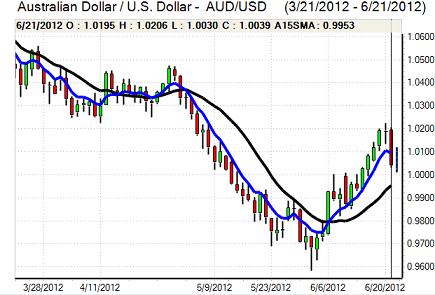
Source: VantagePoint Intermarket Analysis Software
Call now and you will be provided with FREE recent forecasts
that are up to 86% accurate* 800-732-5407
If you would rather have the recent forecasts sent to you, please go here
Australian dollar
The Australian dollar was unable to make a fresh push above the 1.02 level against the US dollar on Thursday and retreated sharply during the day with lows around 1.0030.
The consistently weak tone surrounding global economic data releases undermined confidence in the global growth outlook and also undermined commodity prices which had a dual negative impact on the Australian dollar. There were no major domestic developments with the Australian currency hampered by further regional growth fears and commodity-price vulnerability.